
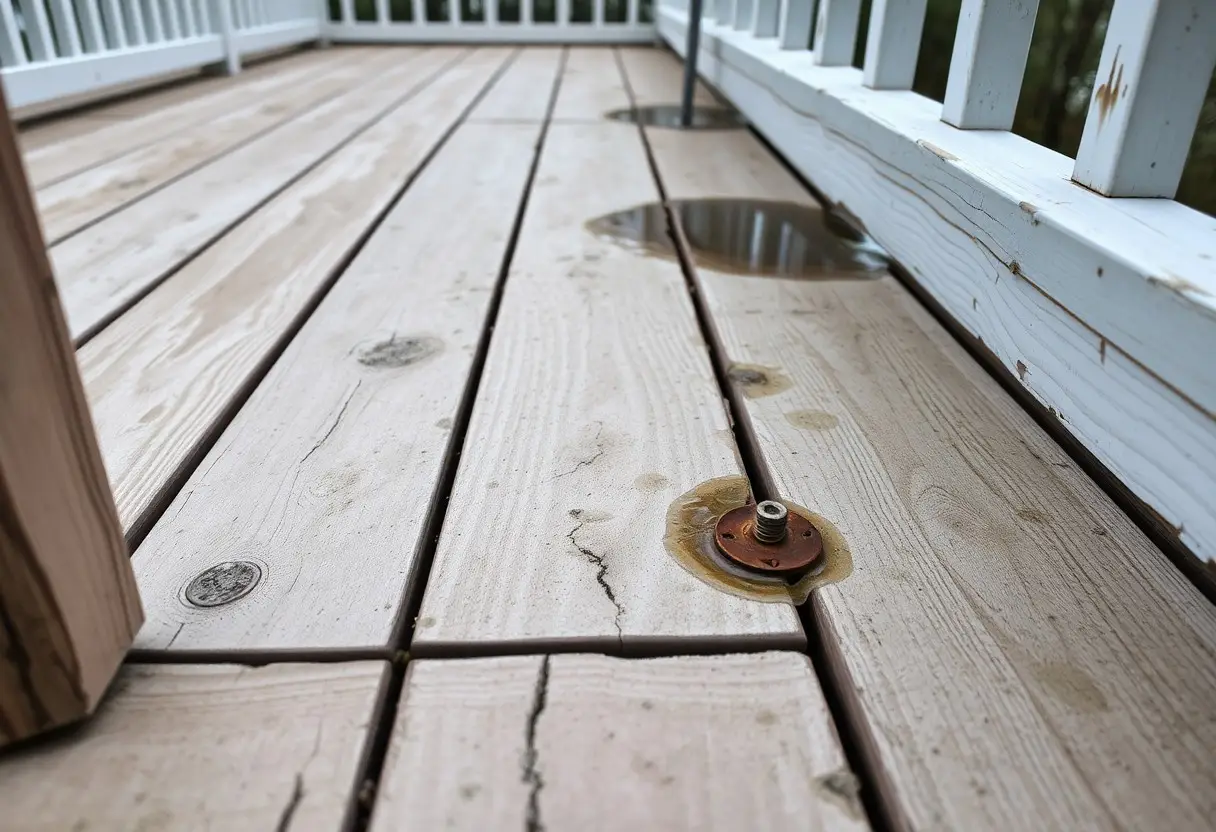

Over winter, your deck endures harsh conditions that often lead to hidden damage. You may discover rotting wood, loose fasteners, or structural instability once snow melts. Cracks, splintering, and mold growth are common, with some issues posing serious safety risks. Catching these problems early helps prevent costly repairs and keeps your deck safe for use.
The Rotting Timber
Moisture trapped in your deck over winter often leads to rot, especially in untreated or older wood. You’ll notice darkened, brittle areas that crumble under pressure. Rot compromises both appearance and safety, making immediate attention important before the damage spreads further into support structures.
Soft Spots
You might first detect rot through soft spots underfoot. These spongy areas signal advanced wood breakdown, often hidden beneath paint or sealant. Walking on them risks injury or collapse, so inspect your deck boards carefully after snow melts.
Structural Decay
Decay in load-bearing components like joists or beams weakens your deck’s integrity. Look for cracked, flaking wood or fungal growth near ground contact points. This damage can lead to catastrophic failure if not addressed by a qualified professional.
When structural decay takes hold, it often starts where moisture lingers-near posts, ledger boards, or where hardware meets wood. The connection between your deck and home becomes vulnerable, and even small gaps can expand into dangerous instability. Left unchecked, this deterioration can require full reconstruction instead of repair. Test joints with a screwdriver; if the metal penetrates easily, replacement is necessary to maintain safety and longevity.
The Iron That Fails
Winter’s freeze-thaw cycles take a hidden toll on your deck’s metal components. Rust and corrosion weaken fasteners and brackets over time, compromising structural integrity. You might not notice it at first, but failing ironwork can lead to dangerous instability in railings and support joints. Regular inspection helps catch these issues before they escalate.
Rising Screws
Moisture trapped in wood expands when frozen, pushing screws upward. You’ll often see them protruding from decking boards, creating sharp hazards under bare feet. These raised fasteners also break the seal against water, accelerating rot. Tapping them back down isn’t enough-replace them to restore safety and durability.
Wobbly Railings
Loose railings often stem from weakened posts or corroded connectors. If you feel any give when leaning on the railing, it’s not just annoying-it’s a serious safety risk. This instability usually starts where the post meets the deck frame, a spot vulnerable to trapped water and decay.
Wobbly railings don’t just signal loose bolts-they often reveal deeper structural decay. When posts shift, they compromise the entire guard system, increasing the risk of falls, especially on elevated decks. Inspect the base of each post for soft wood or rusted brackets, and tighten or replace connections immediately. A secure railing should never move under firm pressure.
The Loss of Color
Your deck likely looks duller now than it did last spring. Winter’s freeze-thaw cycles, UV exposure, and moisture strip away protective finishes, leaving wood faded and lifeless. This color loss signals deeper damage-not just cosmetic wear. Without intervention, your deck becomes more vulnerable to rot and splintering over time.
Grey Wood
Wood turns grey when UV rays break down lignin, the natural polymer that binds fibers. This graying isn’t just unattractive-it weakens the surface, making it more porous and prone to water absorption. You’ll notice this most on horizontal surfaces like decking boards and railings exposed directly to the elements.
Algae Growth
Dark, slippery patches on your deck may be algae thriving in damp, shaded areas. Algae retain moisture, accelerating wood deterioration and creating a fall hazard. It often appears on north-facing sides or spots with poor drainage and heavy tree cover.
Algae don’t just discolor your deck-they compromise its safety and longevity. These microorganisms form a moist biofilm that traps water against the wood, promoting rot and decay beneath the surface. Left untreated, algae-infested areas can weaken structural components and make your deck dangerous to walk on, especially when wet. A simple rinse won’t eliminate it; proper cleaning with oxygen-based or mildewcide solutions is necessary to fully remove growth and prevent recurrence.
The Bending of the Wood
Moisture trapped beneath your deck during winter thaws can cause wood planks to absorb water unevenly, leading to warping and distortion. You’ll often notice boards lifting or twisting at the seams, creating trip hazards and compromising structural integrity. This bending weakens connections over time, making immediate inspection vital after snow melts.
Cupping Planks
Water exposure from above and below causes the edges of deck boards to dry faster than the center, resulting in a concave shape known as cupping. You’ll see visible dips along the plank surface, which can trap water and accelerate rot if left unaddressed. This deformation often signals prolonged moisture damage.
Splintering Ends
Repeated freeze-thaw cycles cause wood fibers at board ends to break apart, creating sharp, splintered edges. These splinters are more than a nuisance-they pose a safety risk to bare feet and can indicate deeper material fatigue. Catching them early helps prevent further deterioration.
When water seeps into the end grain of deck boards, it freezes and expands, forcing fibers to separate with each winter cycle. You’re likely to find these splintered ends near stair treads or outer joists where exposure is greatest. Left untreated, the damage can spread inward, weakening the entire board and increasing the chance of breakage underfoot. Sanding or replacing affected sections promptly restores safety and extends your deck’s lifespan.
The Stripping of the Coat
Your deck’s finish takes a beating over winter, leaving it dull and exposed. Snow, ice, and freeze-thaw cycles break down protective sealants, stripping away the outer layer. Without this barrier, wood becomes vulnerable to moisture and UV damage. Restoring protection early prevents long-term harm and keeps your deck looking fresh.
Peeling Stain
Peeling stain reveals wood once shielded from the elements. You’ll notice flaking or bubbling, especially on horizontal surfaces. This happens when moisture gets trapped beneath the coating. Left unattended, it accelerates wood deterioration and invites deeper damage.
Water Penetration
Water sneaks into cracks and grain when protective layers fail. You might see dark spots, swelling, or soft areas underfoot. This hidden threat leads to rot and structural weakness over time, compromising your deck’s safety.
Water penetration doesn’t always announce itself. It works silently beneath the surface, softening wood fibers and weakening load-bearing components. Fasteners corrode faster, and joints lose stability. By the time visible damage appears, repairs may be extensive. Catching it early through touch and inspection saves cost and ensures longevity.
The Separation from the House
Over time, shifting soil and freeze-thaw cycles can pull your deck away from the house. You’ll notice a growing gap where the ledger board connects to the home’s frame. This movement compromises structural integrity and allows water to seep in, leading to rot or insect damage if left unaddressed.
Flashing Gaps
Water should be directed away from the house by proper flashing at the deck-to-house connection. When gaps appear, moisture penetrates behind the ledger board, inviting rot and mold. Inspect the seam where the deck meets your home-any visible opening means protection has failed and needs immediate repair.
Rusted Bolts
Bolts securing the ledger board to your house can corrode over winter. Rust weakens these fasteners, reducing the deck’s load capacity. If you spot reddish stains or flaking metal around bolt heads, it’s a clear sign of deterioration that demands prompt attention.
Corroded bolts don’t just look bad-they’re a serious safety risk. As steel degrades, the connection between your deck and home loses strength, increasing the chance of partial collapse under weight. Replacing rusted hardware with galvanized or stainless steel bolts restores safety and extends your deck’s lifespan. Always inspect these critical points before the spring season begins.
Conclusion
Summing up, you often face warped boards, loose fasteners, and water damage on your deck after winter. Cold temperatures, snow, and ice take a toll on wood and structural integrity. Spotting these issues early helps prevent costly repairs. You can extend your deck’s life with timely inspection and maintenance each spring.

FAQ
Q: Why does my deck have warped or cracked wood after winter?
A: Prolonged exposure to freezing and thawing cycles causes wood to absorb moisture and then expand when it freezes. This repeated stress breaks down the wood fibers over time, leading to warping, splitting, or cracking. Decks made from untreated or older wood are especially prone to this damage. Ice buildup in small cracks can act like a wedge, forcing splits wider. Regular sealing and using weather-resistant materials can reduce this risk, but seasonal inspections help catch issues early.
Q: I noticed loose or wobbly railings-how did winter cause that?
A: Shifting soil from freeze-thaw patterns can loosen the posts that support railings. When the ground freezes, it expands, pushing posts upward or sideways. Once it thaws, the soil settles unevenly, leaving gaps around the base. Over time, this movement weakens connections and makes railings unstable. Fasteners like screws and bolts may also corrode in damp, salty conditions, especially if de-icing salts were used nearby. Checking post anchors and tightening or replacing hardware in spring restores safety.
Q: There’s mold and dark stains on my deck-should I be concerned?
A: Mold, mildew, and dark discoloration often appear after winter due to prolonged dampness, leaf debris, and limited sunlight. These organisms thrive in cool, moist environments and can degrade wood finishes or penetrate softwood surfaces. While surface mold can be cleaned, persistent stains may indicate deeper moisture retention or wood rot. A simple test-pressing the wood with a screwdriver-can reveal soft spots. Cleaning with oxygen-based or mildew-specific cleaners and improving drainage and airflow helps prevent recurrence.