
Over time, your electrical demands can outpace an aging panel; if you see frequent breaker trips, sparks, a burning smell, warm outlets, or flickering lights, you face increased fire risk and unreliable power. If your home still uses fuses or a low-amp service, upgrading will provide safer, more reliable capacity and protect your appliances and family.
Common warning signs to watch for
Frequent breaker trips, nuisance resets, and blown fuses
When breakers trip several times a month or fuses blow as you run a space heater, hair dryer, or window AC, your circuits are likely overloaded; most branch circuits are 15-20 amps and should not trip repeatedly. If you see sparking, a burning smell, or breakers that won’t reset, the problem may be more than an overloaded circuit – upgrading to a 100-200 amp service can relieve chronic overloads and allow modern loads like EV chargers.
Flickering or dimming lights, dead outlets, and warm receptacles
Flicker when large appliances start, outlets that work intermittently, or receptacles that feel warm indicate loose connections, high resistance, or voltage drop; nominal household voltage is ~120V, and dips below ~110V under load are concerning. Pay attention to warm, discolored outlets, buzzing, or scorch marks, since those are signs of arcing and elevated fire risk that require prompt attention.
Often the pattern tells the story: lights that dim only when your HVAC or refrigerator kicks on point to high inrush currents and possible weak breakers or a crowded panel bus; sustained voltage under 110V or drops greater than 10% under load suggest a service or panel issue. Dead outlets limited to one circuit often mean an open neutral or a tripped GFCI/AFCI, while warm receptacles usually indicate high resistance at a connection-both increase the chance of electrical fires and warrant a licensed electrician’s diagnosis.
Visible and audible panel issues
Rust, corrosion, water damage, scorch marks, or a hot/burning smell
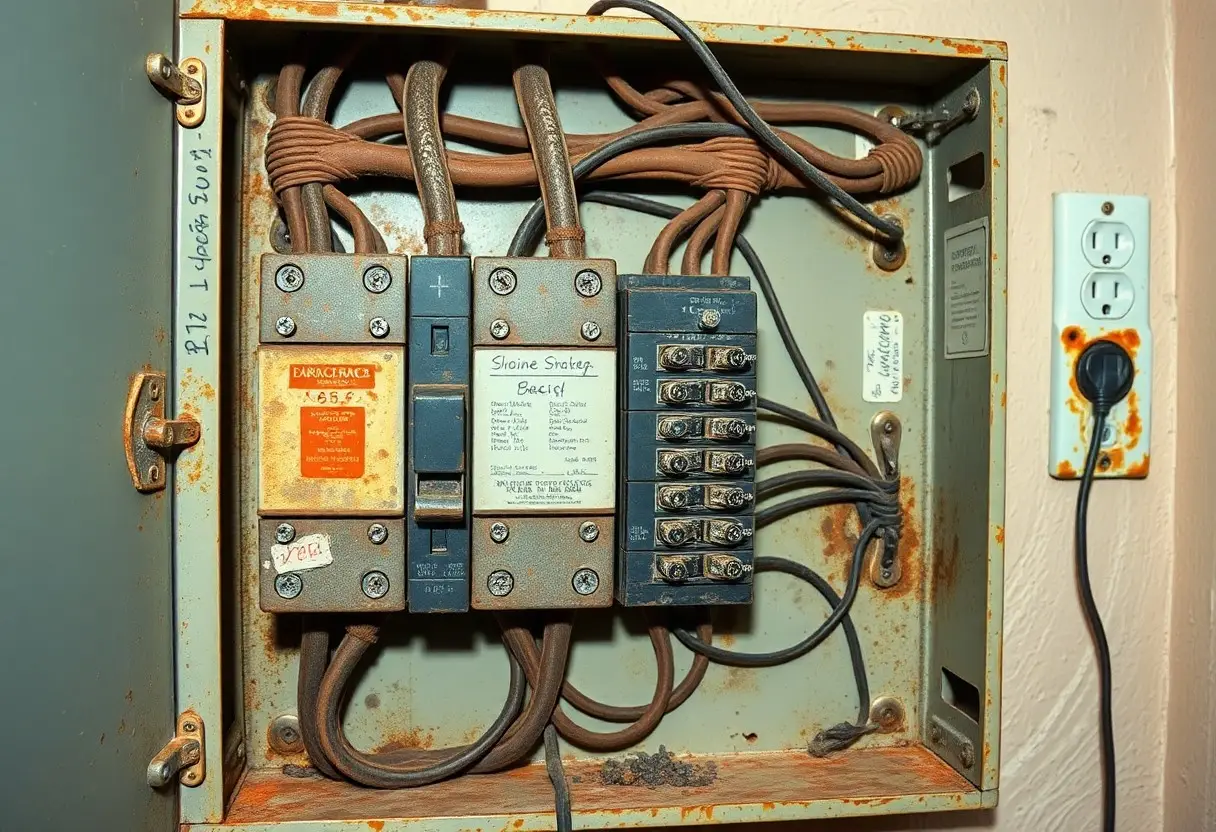
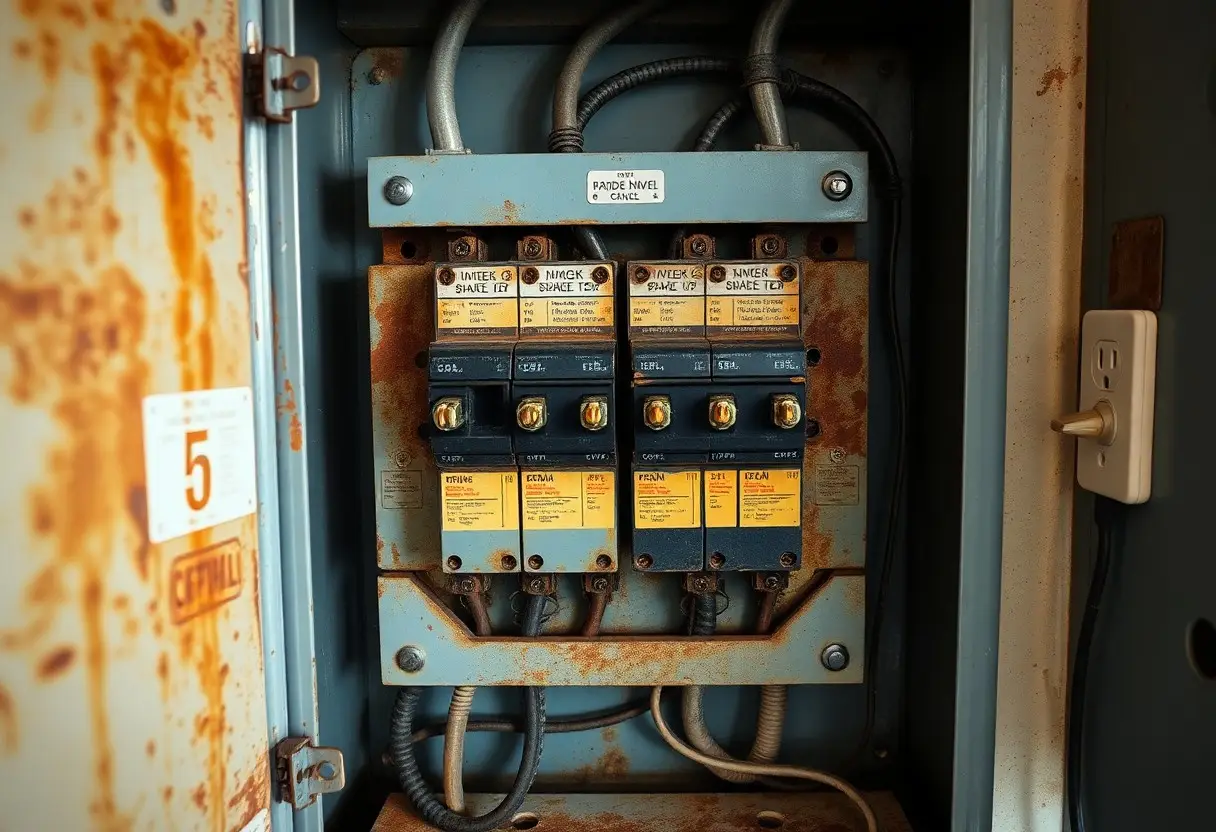
If you see rust, corrosion, blistering paint, brown water stains or scorch marks on the panel, or notice a hot, burning smell, treat it as an urgent hazard. Water intrusion from basement seepage or roof leaks often accelerates corrosion and can short circuits within months; melted insulation or black streaks around bus bars indicate past overheating. You should isolate affected circuits and get a licensed electrician to assess panel integrity and moisture sources within 24-48 hours.
Buzzing, humming, or cracking noises and loose or sparking connections
When you hear persistent buzzing, humming, cracking or spot intermittent sparking, it often signals loose lugs, failing breakers, or arcing at terminals-conditions that create heat and can ignite insulation. Buzzing that intensifies with load (oven, HVAC, EV charger) pinpoints overloaded or compromised connections; note which appliances coincide with the noise and avoid using them until inspected.
Loose connections can produce high-resistance hotspots that may reach well over 150°F at the terminal, charring wire insulation within minutes and causing recurring trips or flicker. In one Moline repair case, a single loose neutral lug produced hourly arcing and melted adjacent wires, forcing a panel replacement. If you observe sparking, visible arcing marks, or increasing noise under heavy load, shut off affected circuits and arrange same-day professional service to prevent fire risk.
Outdated equipment and capacity problems
When your panel, wiring, or service amperage dates to older standards you may face frequent trips, dimming lights, and hot connections. Many Moline homes built before 1960 still have 60A or smaller service, which can’t reliably power modern appliances; most safe upgrades go to 100-200A. Missing GFCIs/AFCIs and ungrounded outlets increase your shock and fire risk. Buzzing, warm panel covers, or burning odors are clear signs you need professional evaluation.
Presence of a fuse box, two-prong outlets, or undersized amperage (60A or less)
If your home still uses a fuse box or two-prong receptacles you lack grounding and modern overcurrent protection. Fuses can be bypassed with oversized replacements, letting circuits overheat and insulation degrade; two-prong outlets mean appliances go ungrounded. With a 60A service you likely can’t run an electric range, central AC, and an EV charger without constant tripping. Frequent blown fuses, warm outlets, sparking, or visible arcing are indicators you should upgrade.
Increased load from EV chargers, modern HVAC, workshops, or additions
Adding an EV charger, a new 3-ton HVAC, a dedicated workshop, or a major addition often overwhelms older panels. Level 2 EV chargers typically draw 16-48A, modern heat pumps and AC compressors commonly require 30-60A, and welders or large air compressors need 240V circuits. You may notice voltage drop, appliances stalling, or breakers running at capacity-signs your service needs expansion or redistribution.
NEC rules size continuous loads at 125%, so a 32A continuous EV charger requires a 40A breaker and a 40A/240V circuit provides up to 9.6 kW. Pairing that with a 3-ton AC (roughly 30-50A) can push demand well beyond a 60A service100-200A to eliminate overheating, nuisance trips, and elevated fire risk.
Safety and code/compliance concerns
Fire risk from overloaded circuits, shared neutrals, and improper repairs
If you keep adding high-draw appliances to a 60-100A service, continuous loads above 80% of a breaker’s rating can heat wires and connections, causing insulation to char and sparks to form. Shared neutrals on multiwire branch circuits must have tied breakers or you risk dangerous overloading. DIY splices, backstabbed connections, and loose lugs increase arcing; arcing faults and overheated terminations are common causes of residential electrical fires.
Local Moline/Illinois code requirements, permits, and inspection triggers
You need permits for service changes, panel upgrades, and most new circuits; Moline enforces the Illinois-adopted National Electrical Code with local amendments, and work typically requires a city inspection. Unpermitted or noncompliant work can lead to failed inspections and insurance coverage issues, so ensure licensed electricians pull permits and coordinate with the Building Division before energizing altered services.
Examples that commonly trigger permits and inspections include upgrading service size (for example moving from 100A to 200A), installing an EV charger, adding a subpanel, or changing meter equipment-utility coordination may be required for a 200A swap. Inspectors will verify proper bonding/grounding, correct AFCI/GFCI protection where code now mandates it, proper panel labeling, and safe conductor terminations before approving the job.
How to assess the need (what homeowners can and shouldn’t do)
When assessing whether your panel needs work, you can perform basic visual checks but should avoid opening live components. Check the panel label for service amperage and manufacturer, note age (panels older than 25-40 years often show wear), and log symptoms like frequent trips or appliance issues. If you find signs of overheating, water entry, or recalled brands (e.g., Federal Pacific, Zinsco), stop DIY work and call a pro for safe evaluation.
Safe homeowner checks: panel labeling, age, visible damage, and appliance behavior
You can safely inspect the exterior: verify the main breaker rating on the label, note the panel’s manufacture date, and look for rust, burn marks, loose or double-tapped breakers. Watch for repeated tripping, dimming lights when the HVAC or microwave runs, or outlets that feel warm. Photograph labels and symptoms so your electrician sees exact issues. Do not touch wiring, remove the cover, or try to tighten connections yourself.
When to stop and call a licensed electrician for testing, load calculations, and infrared inspection
If you detect burning smells, arcing sounds, persistent overheating, water intrusion, or if your home has a 60-100 amp service but you plan an EV charger, heat pump, or are experiencing frequent overloads, call a licensed electrician. They’ll perform proper load calculations (including major appliances and square footage), clamp-meter testing, and infrared scans to locate hotspots. Those diagnostics require trained personnel and calibrated tools-don’t attempt them yourself.
When the electrician arrives, expect a load calculation using NEC methods or common industry rules-estimating kitchen, laundry, HVAC, and general lighting demand-to determine whether you need a 100A, 150A, or 200A service; many modern homes are best served by 200A. They’ll record amperage under normal conditions with a clamp meter and use an infrared camera to flag connections running 15-25°F hotter than surrounding parts, which indicates loose or corroded connections and elevated fire risk. You should get a written report with prioritized repairs and a cost estimate for repair versus full upgrade.
The upgrade process, costs, and planning
You should plan for an electrician-led assessment, permit approval, the panel swap or service increase, and final inspection; most homeowners upgrade from 60A or 100A to 200A to support EV chargers and modern HVAC. Typical total costs range from about $1,200 to $4,500 for a straightforward 200A upgrade, with longer timelines and higher bills when meter relocation, underground feed, or hazardous wiring is involved.
Typical steps: evaluation, permit, panel replacement or service increase, inspection
An electrician will perform a load calculation and thermal check-often $150-$300-then you or the contractor pulls a permit (municipal processing can take 1-21 days). During the swap the crew de-energizes circuits, removes the old panel, installs the new panel or service mast, and re-threads breakers; a municipal or utility inspector signs off before power is fully restored. Unsafe panels like Federal Pacific or Zinsco typically get replaced immediately.
Cost drivers, timeline expectations, financing options, and minimizing disruption
Major cost drivers include amperage increase, the need to relocate the meter or switch from overhead to underground service, breaker count, and labor rates ($70-$120/hr typical). Expect a short outage of 2-8 hours for a straight swap, but utility work can extend the project to days. You can use personal loans, HELOC, contractor financing, or 0% intro credit offers; schedule work mid-week and keep a generator or neighbor’s fridge available to minimize disruption.
For example, a standard 200A panel change often runs $1,800-$3,500; adding a new service lateral or meter move can add $500-$2,000 and take an extra 3-7 business days due to utility coordination. Permit fees usually fall between $50-$300, while inspection rechecks add delays if corrections are needed. If you finance, compare APRs: a HELOC may offer 4-7% vs. credit card introductory 0% for 12-18 months. Scheduling during business hours and staging appliances reduces inconvenience.
Final Words
Summing up, if you notice frequent breaker trips, flickering lights, burning smells, outdated knob-and-tube or fuse systems, insufficient outlets for modern appliances, or warm outlets and buzzing from your panel in your Moline home, you should consult a licensed electrician to evaluate and upgrade your electrical panel to improve safety and support your home’s power needs.