
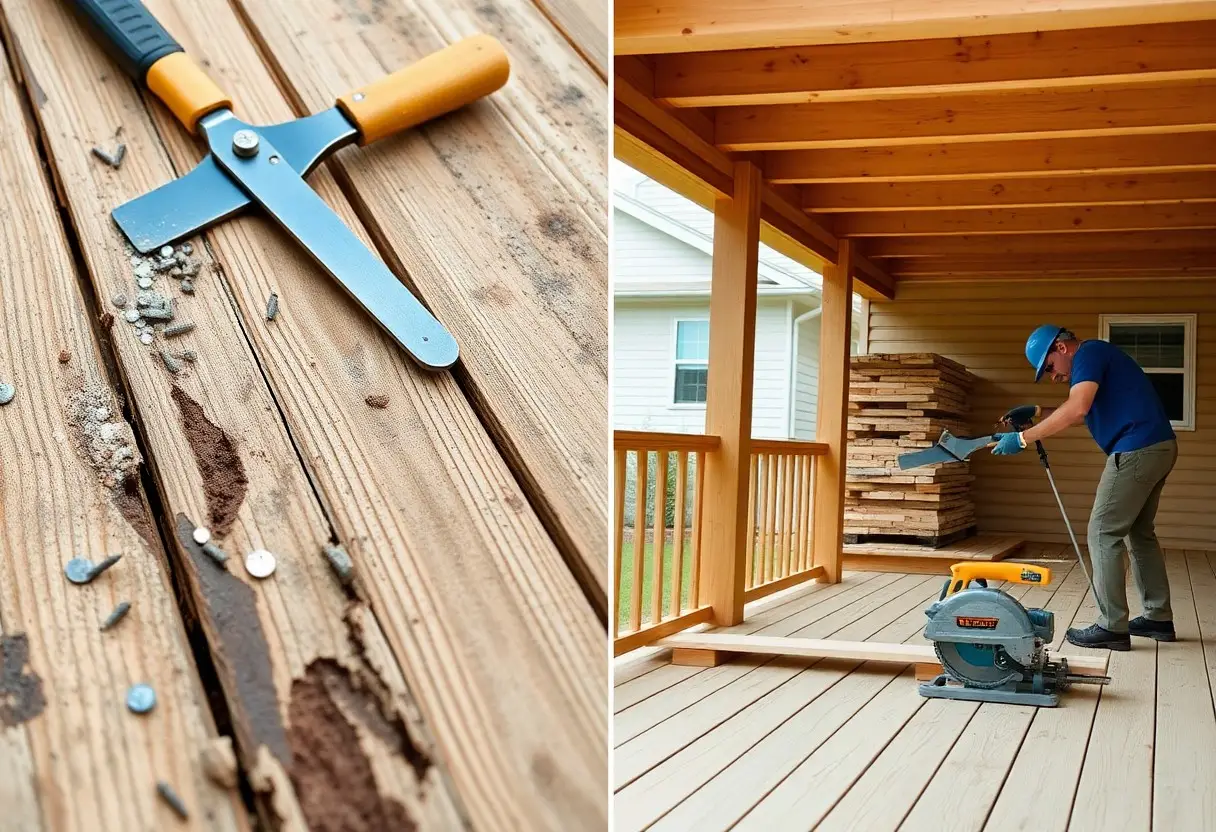

Many homeowners face the decision of repairing or replacing their deck, but structural damage can make replacement the only safe option. You need to assess wear, rot, and stability carefully. While repairs save money, a compromised frame risks serious safety hazards. Knowing the signs helps you choose wisely and protect your home.
Key Factors in Evaluating Deck Health
Age, material type, and visible signs of wear all influence your deck’s condition.
- Rotting wood signals structural compromise
- Loose railings pose safety risks
- Frequent repairs may hint at larger issues
- Water pooling accelerates deterioration
The decision to repair or replace often hinges on these indicators.
Assessing the Age and Material Type
Most wooden decks last 10-15 years with regular upkeep, while composite options can exceed 25. If your deck is nearing or past its expected lifespan, material fatigue becomes a real concern. Older pressure-treated wood often shows widespread splintering and warping. The older the deck, the more likely replacement makes long-term sense.
Identifying Surface Wear vs. Internal Decay
Surface splinters or fading stain are cosmetic issues you can often fix. But if joists or beams feel soft under pressure, internal decay is likely present. Probing with a screwdriver can reveal hidden rot beneath the surface. The structural integrity of your deck depends on what’s happening beneath the visible layer.
Surface wear typically affects only the top layer and can be sanded or refinished safely. Internal decay, however, eats away at load-bearing components, making the deck unsafe even if it looks stable. Hidden moisture damage often occurs under decking boards or around support posts where drainage is poor. The safest approach is to inspect beneath and behind visible surfaces before deciding on repairs.
How to Perform a DIY Structural Inspection
Start by examining your deck during daylight to catch subtle signs of wear. Probe soft spots in wood with a screwdriver to uncover hidden rot. Look for shifting railings, sagging areas, or uneven boards that suggest structural compromise. If fasteners appear corroded or loose, they may no longer support safe loads. Your observations now can prevent dangerous failures later.
Testing for Wood Rot in Posts and Joists
Poke the ends of support posts and joists near the ground with a sharp tool. If the wood feels spongy or crumbles easily, you likely have advanced rot. Discoloration or fungal growth are red flags. Address affected areas immediately-ignoring them risks collapse and costly repairs down the line.
Checking Ledger Board and Fastener Security
Press firmly on the deck near the house to feel for movement. Any wiggle means the ledger board may be failing. Inspect for rusted nails or missing bolts-these compromise attachment strength. A loose ledger is the most dangerous flaw, as it can lead to the entire deck detaching from your home.
The ledger board connects your deck directly to the house, making its integrity non-negotiable. It should be secured with structural screws or through-bolts, not nails. Check for gaps between the ledger and house siding, which can indicate water intrusion and hidden decay. Flashing must be present to prevent moisture buildup. If you spot any looseness or corrosion, stop using the deck until a professional evaluates it-this isn’t a repair to delay.
Common Repair Scenarios for Minor Damage
Most deck issues don’t require a full rebuild. If you notice isolated problems like a few damaged boards or surface wear, repairs can restore safety and appearance. Addressing minor damage early prevents costly issues later and extends your deck’s lifespan without the expense of replacement.
Replacing Individual Warped or Cracked Boards
You can often fix structural concerns by swapping out only the affected boards. When wood warps or cracks due to moisture or age, removing and replacing those pieces restores integrity. This targeted fix is cost-effective and preserves the rest of your deck’s sound structure.
Sanding and Resealing for Aesthetic Renewal
Surface discoloration or fading doesn’t always mean your deck is failing. Sanding smooths rough areas and preps the wood for a fresh sealant. Reapplying a quality sealant protects against water damage and UV rays, giving your deck a refreshed look with minimal effort.
Sanding and resealing works best when the underlying structure is solid and only the top layer shows wear. You’ll remove a thin layer of wood to eliminate splinters, stains, and grayed fibers, revealing fresher material beneath. Once smooth, applying a water-resistant sealant dramatically boosts protection and curb appeal, often making a deck look years younger. This process is ideal for decks under 10 years old with no signs of rot or instability.
Critical Red Flags That Demand Full Replacement
Ignoring severe deck damage puts your family at risk. If you notice deep rot, shifting railings, or sinking sections, your safety is compromised. These signs often mean the structural integrity is beyond repair. When foundational elements fail, patchwork fixes won’t cut it-replacement becomes the only responsible choice.
Widespread Structural Instability
Shifting or sagging across multiple areas signals deep structural failure. When joists, beams, or posts show advanced decay or misalignment, the entire framework is compromised. You can’t safely reinforce every failing component. In these cases, rebuilding ensures long-term stability and prevents dangerous collapses.
Non-Compliance with Modern Safety Codes
Your deck may look solid but still pose serious risks. If guardrails are below 36 inches, stair spacing is uneven, or fasteners don’t meet current standards, it fails modern safety requirements. These outdated features increase fall risks and could affect insurance or resale value.
Many older decks were built before today’s strict safety regulations. Current codes require stronger connections, proper railing spacing, and improved stair design to prevent accidents. If your deck lacks hurricane ties, has wide baluster gaps, or unstable steps, you’re not just out of code-you’re risking lives. Retrofitting to meet these standards often costs nearly as much as a new, safer build, making replacement the smarter long-term decision.
How to Conduct a Cost-Benefit Analysis
Start by calculating your deck’s current repair estimate versus the average cost of a full replacement in your area. Hidden structural damage can quickly make repairs more expensive than rebuilding. You’ll want to weigh material longevity, expected lifespan, and how often you use the space. A clear financial picture helps you avoid overspending on temporary fixes.
Comparing Short-Term Fixes to Long-Term Value
Think beyond today’s price tag-some repairs only delay inevitable replacement. Superficial fixes may save money now but often lead to higher costs later if underlying issues persist. Consider how long you plan to stay in your home and whether upgrades could boost resale value. Lasting quality usually outweighs short-term savings.
| Factor | Consideration |
|---|---|
| Repair Cost | Less than 50% of replacement? Repair may be worthwhile |
| Deck Age | Over 15 years? Replacement likely more cost-effective |
| Structural Integrity | Rot or foundation issues? Replacement often safer |
| Material Quality | Upgrading materials can extend lifespan and reduce maintenance |
Evaluating Labor Costs for Repairs vs. New Builds
Repair work often requires skilled labor to match existing structures, which can be time-consuming and costly. Full replacements may offer better labor efficiency, especially with standardized designs. Contractors typically price rebuilds at a lower hourly rate due to predictable workflows. You could save money long-term by choosing a clean-slate approach.
When you break it down, repairing damaged joists or patching boards demands precision and often takes longer than building fresh. Labor for repairs can run higher per hour because technicians must work around old materials, navigate inconsistencies, and preserve aesthetics. In contrast, new builds follow a clear plan, reducing on-site surprises. This efficiency often translates to lower overall labor expenses, even with a larger project scope.
Proactive Maintenance Tips to Extend Deck Life
Keep your deck in top condition with regular care. Inspect for rot, loose boards, and rusty fasteners twice a year. Clean debris from seams and railings to prevent moisture buildup. Wash the surface with a mild detergent and low-pressure rinse. Apply a waterproof sealant annually. Recognizing early signs of wear saves you from costly deck replacement.
Establishing a Seasonal Cleaning Routine
Spring and fall are ideal times to clean your deck. Sweep away leaves and dirt weekly to prevent staining and moisture retention. Use a soft brush and oxygen-based cleaner to remove mildew without damaging wood fibers. Rinse thoroughly and let dry before placing furniture back. This simple habit prevents long-term deterioration.
Applying Protective Coatings and Sealants
A fresh coat of sealant shields your deck from UV damage and rain. Choose a water-repellent product with mildewcide for maximum protection. Apply evenly with a roller or sprayer every 12 to 18 months. Let it cure fully before use. Recognizing when the old layer is peeling ensures continuous defense.
Protective coatings do more than repel water-they slow wood graying and reduce splintering. Penetrating sealers soak into the grain, while film-forming finishes create a visible barrier. For composite decks, use manufacturer-recommended products to avoid voiding warranties. Reapplication timing depends on sun exposure and foot traffic, so monitor high-use zones closely.
Conclusion
Conclusively, your deck’s condition determines whether repair or replacement is the right choice. If damage is localized and the structure is sound, repairs restore safety and appearance. When rot, warping, or foundational issues spread, replacement becomes the smarter, longer-lasting solution. You know your home best-assess honestly and act accordingly.
FAQ
Q: How do I know if my deck needs repair instead of a full replacement?
A: Signs your deck can be repaired include isolated rot in a few boards, loose railings, or minor warping that hasn’t compromised the structure. If the frame and support posts are still solid and the damage is mostly cosmetic or limited to surface-level components, repair is usually the better option. A professional inspection can confirm whether the foundational elements are intact. Most repairs address issues like replacing damaged decking boards, tightening connections, or resealing the wood.
Q: When should I consider replacing my deck entirely?
A: Full replacement becomes necessary when the structural integrity is compromised. This includes widespread rot in support beams, sinking or shifting in the foundation, or significant insect damage like from termites or carpenter ants. If your deck is over 20 years old and has undergone multiple repairs, it may no longer be safe or cost-effective to keep fixing. Persistent wobbling, uneven surfaces, or nails pulling out of wood are red flags that replacement should be considered.
Q: Is repairing a deck always cheaper than replacing it?
A: Repairing is often less expensive, but not always. Minor fixes like board replacement or resealing might cost a few hundred dollars. However, extensive repairs involving beam replacement, structural reinforcement, or labor-intensive fixes can approach or even exceed the cost of a new deck. In some cases, building a new deck with modern materials like composite decking offers better long-term value, lower maintenance, and improved safety, making replacement the smarter financial choice over time.