
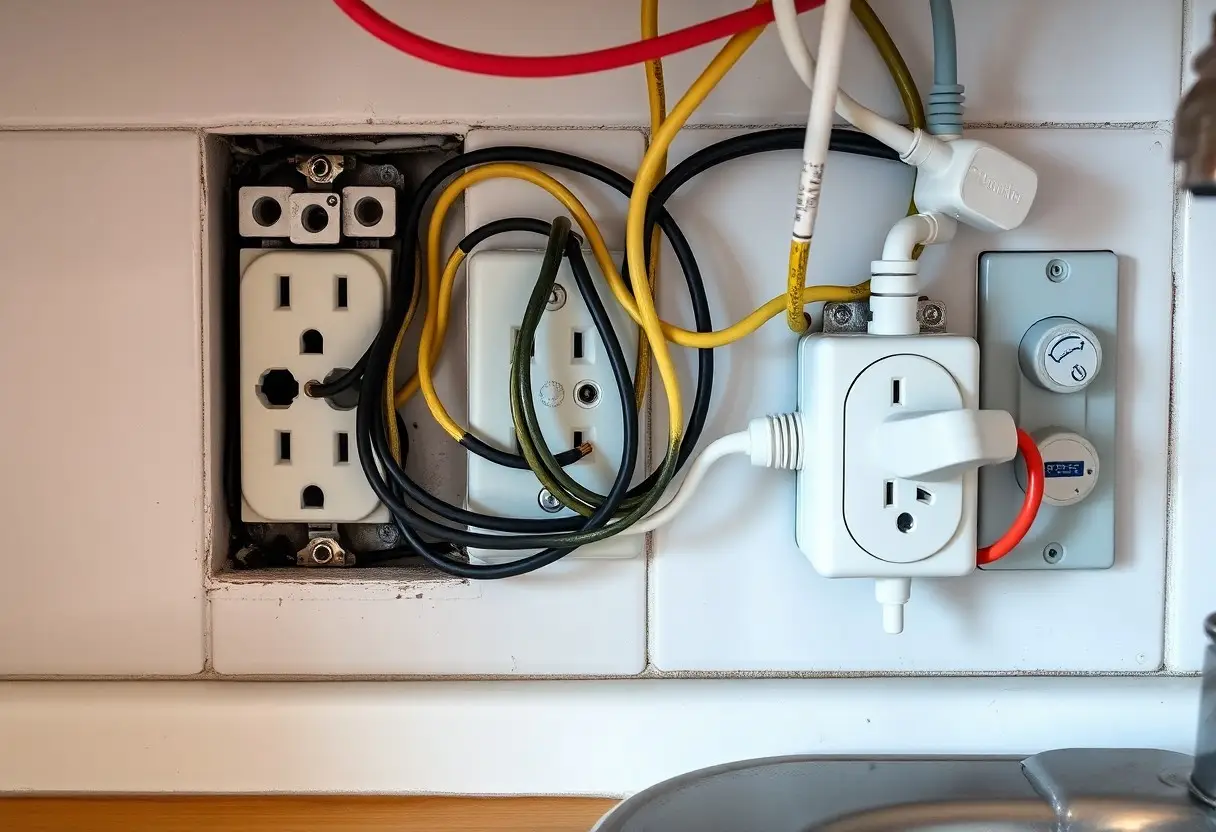

With many local homes built decades ago, you often encounter outdated wiring (knob-and-tube or aluminum), overloaded circuits and inadequate ground-fault and arc-fault protection that increase fire risk; you should prioritize a licensed inspection to identify DIY modifications without permits and faulty panels, and trust certified electricians for code-compliant upgrades that protect your family and property.
Common Code Violations in Davenport Residences
In many Davenport homes you encounter several recurring code violations: outdated knob‑and‑tube or aluminum wiring, overloaded circuits, missing AFCI/GFCI protection, and improper panel modifications. Insurance inspections and municipal inspections often flag these during sales or remodels, with electricians finding examples like double‑tapped breakers, open neutral issues, and receptacles without GFCI protection in kitchens and bathrooms. You should expect targeted repairs rather than cosmetic fixes when these are discovered.
Outdated or noncompliant wiring (knob‑and‑tube, aluminum)
Homes built before the 1950s commonly retain knob‑and‑tube, and many from the 1960s-1970s have aluminum branch circuits; both present higher risk of degradation and loose connections. You’ll face insurer resistance and >50% higher likelihood of requiring full circuit replacement when these systems are present. Expect localized rewiring or full panel upgrades, and note that aluminum connections often need special CO/anti‑oxidant treatment or complete replacement to copper.
Overloaded circuits and improper breaker protection
Rooms wired with 15A or 20A circuits are often burdened by multiple high‑draw devices, and you encounter DIY circuits lacking proper AFCI/GFCI protection. You may see kitchens with too few dedicated circuits or living rooms with several power strips daisy‑chained, increasing fire risk. Overloads and improper breaker types are frequent causes of nuisance trips and, worse, undetected overheating when breakers are aged or mislabeled.
Further detail: continuous loads must be kept to 80% of breaker rating (about 12A on a 15A circuit, 16A on a 20A), yet you routinely find space heaters (~1,500 W → ~12.5A) plus TVs and chargers pushing panels past that limit. You also encounter double‑tapped breakers, mismatched fuse/breaker replacements, and breakers that no longer trip; thermal imaging and load calculations often reveal hot spots that require redistribution, adding dedicated 20A or 30A circuits per NEC guidance.
Service Equipment and Panels
Your service equipment – meter, main breaker, bus, and grounding electrode conductor – often reveals whether a home can safely handle modern loads. Many Davenport residences still have 60-100 amp mains from mid‑century builds; when you add EV chargers, central A/C, or multiple appliances, feeders heat, breakers trip, and the fire risk rises. Inspect panel interiors for corrosion, damaged insulation, and proper grounding before planning any circuit additions.
Obsolete panels, unsafe modifications, and recalls
Panels like Federal Pacific (FPE Stab‑Lok), Zinsco, and some 1970s-80s models are frequently cited for failures where breakers fail to trip or bus connections overheat. If you find missing labels, painted‑over tags, or aftermarket handle ties, treat the unit as unsafe. Several manufacturers and insurers have flagged these types for replacement because historical testing showed elevated failure rates and safety concerns.
Insufficient capacity, poor labeling, and loose connections
When your service rating is too low for current demands, circuits become overloaded, labels are misleading, and terminal lugs loosen from thermal cycling – all leading to arcing and nuisance trips. A common solution is upgrading to a 200 amp service and correcting labeling, which reduces overload heating and improves fault protection performance.
Typical indicators you can observe are buzzing covers, warm panel surfaces, dimming lights on motor starts, and breakers tripping during modest loads; in one Davenport inspection a 90‑amp legacy service caused an EV charger to trip at 30 amps and produced localized overheating at a loose neutral lug. Use infrared scans, verify circuit identification, and have a licensed electrician inspect lug torque and corrosion before deciding on replacement or an upgrade.
Receptacles, Switches, and Protection Devices
In many Davenport homes you’ll encounter outdated receptacles, loose switches, and missing protective devices that create real hazards; for example, kitchens and bathrooms require GFCI protection and most living areas now need AFCI protection under modern NEC guidance. Check for 3-prong ungrounded outlets, backstabbed wires, and overloaded multi-receptacle circuits, since these conditions increase heat and arcing risk on 15-20 A branch circuits and often show up during home inspections.
Missing or nonfunctional GFCI and AFCI protection
You should test GFCIs monthly using the built-in button and confirm AFCIs haven’t been replaced by standard breakers, because a properly functioning GFCI trips at about 4-6 mA ground-fault current and an AFCI detects destructive arcing patterns before a fire starts. Home inspectors frequently find bathrooms, garages, and exterior outlets lacking GFCI, and bedrooms without AFCI, so verify protection on circuits serving kitchens, baths, garages, basements, and sleeping areas.
Damaged, improperly installed, or improperly grounded outlets
Pay attention to cracked faceplates, loose receptacles that pull away from the box, reversed polarity, and open grounds, since those faults cause arcing, nuisance trips, or no ground-fault protection; common installation errors include backstabbed wires and omitted pigtails on multi-device boxes, which raise resistance and heating under normal 10-20 A loads.
When you inspect further, use a three-light receptacle tester to confirm hot/neutral/ground wiring and a multimeter to check ~120 V between hot and neutral; if you find loose screws or degraded insulation, shut off the branch circuit before tightening, replace receptacles with tamper-resistant or GFCI devices as needed, and hire a licensed electrician for rewiring, grounding corrections, or any repairs that require box modifications.
Grounding, Bonding, and Electrical Continuity
When grounding electrodes and bonding are compromised, you lose the designed fault-return path that makes breakers and fuses protective. Common issues include missing or corroded clamps on an 8‑foot ground rod, unconnected concrete-encased (Ufer) electrodes, or multiple electrodes left unbonded, all of which can prevent sufficient fault current and stop a breaker from tripping-raising your risk of shock, fire, and equipment damage.
Inadequate grounding electrodes and fault paths
You frequently find the grounding electrode conductor crushed, nicked, or landed under paint, and the clamp to the rod or structural electrode loose or corroded. That kind of degradation raises system resistance so fault current may not return to the service, meaning breakers may not clear; inspectors often see visible rusted clamps and open or intermittent connections that turn a small fault into a persistent hazard.
Bonding deficiencies at water, gas, and metal systems
You’ll encounter unbonded water heaters, gas piping, HVAC casings, and metal stair rails that become unintended current paths. When piping or equipment isn’t tied into the grounding electrode system, the metal can become energized, producing shock and arcing risks and creating stray voltages that damage electronics or cause corrosion.
In practice, you should ensure bond jumpers bypass removable sections like meters and valves so continuity is maintained; installers typically use #6 AWG copper jumpers on residential systems and listed clamps or exothermic connections for long-term reliability. Testing with a low-resistance meter and visually confirming clamps are tight, clean, and free of paint or corrosion verifies the bond. Compliance with NEC bonding points for gas, water, and structural metal prevents the most common energized‑piping failures inspectors document.
Lighting, Fixtures, and Appliance Connections
Your lighting and appliance connections often reveal installation shortcuts: residential lighting load for calculations is typically taken as 3 VA per ft² under NEC rules, and most lighting branch circuits in living areas now require AFCI protection. You’ll find improper box fill, unlisted adapters, and mismatched fixture ratings that lead to overheating or nuisance tripping; fixing these means verifying box fill, conductor ampacity, and using listed fittings rated for the fixture and location.
Improper fixture mounting, heat clearances, and wiring methods
You frequently see ceiling fans hung from standard octagon boxes instead of a box listed for fan support (often up to 70 lb), recessed cans installed without the correct IC-rating, and halogen fixtures placed too close to combustible trim. NM cable must be secured within 8 inches of boxes and protected where it passes through framing; failing that you risk chafing, arcing, and fire hazards that inspectors cite most often.
Appliance circuits, dryer/AC connections, and dedicated circuits
Dryers require a 30 A, 120/240 V branch circuit with a 4‑wire receptacle for new installs (post‑1996), while electric ranges commonly need 40-50 A circuits and central A/C condensers require a dedicated circuit sized per the unit nameplate (often 15-60 A). Kitchens demand 20 A small‑appliance circuits for counters, and many violations stem from sharing loads or using undersized breakers for nameplate amperage.
In inspections you’ll often find dryers wired to old 3‑prong cords, window ACs on extension cords, or refrigerators tied into kitchen counter circuits-each a fire risk. You must size conductors to the appliance nameplate and apply 125% sizing where the load is continuous or manufacturer specifies; multi‑wire branch circuits need handle‑tied or common‑trip breakers to prevent neutral overloading. Correcting these prevents overheated conductors, nuisance tripping, and potential electrical fires.
Permits, Inspections, and Safe Remediation
Local permit requirements and inspection triggers in Davenport
You must obtain a permit from Davenport when you alter the service, install a new 240V appliance (range, dryer, EV charger), add a subpanel, or reconfigure branch circuits; these work items typically trigger a rough and final inspection. Inspectors verify bonding, grounding, clearances, and panel labeling. Open permits on resale can stop closings, and DIY service changes without inspection are a safety hazard and code violation.
Hiring licensed electricians, documentation, and code compliance strategies
You should hire a licensed electrician and verify license number, liability insurance, and local references before work starts. Require the contractor to pull permits, provide a written scope, deliver as-built photos, torque reports, and the final inspection sign‑off. That documentation protects your home, speeds real-estate closings, and proves code compliance in case of insurance claims.
Before you sign, check the electrician’s license through the state lookup, get at least three bids, and insist on a written warranty (commonly 1-2 years labor). Ask the electrician to test AFCI and GFCI protection, torque service lugs, and provide meter bonding photos. In one Davenport case a homeowner upgraded to 200A but lacked a bonded meter-hiring a licensed pro who documented fixes and pulled final inspection cleared the sale.
Summing up
Now you should be proactive about common Davenport code issues like outdated wiring, missing GFCIs, improper grounding, overloaded circuits, and DIY alterations; have inspections, proper panel labeling, and licensed electricians perform necessary upgrades so your system meets code, protects your property, and reduces safety and fire risks.