
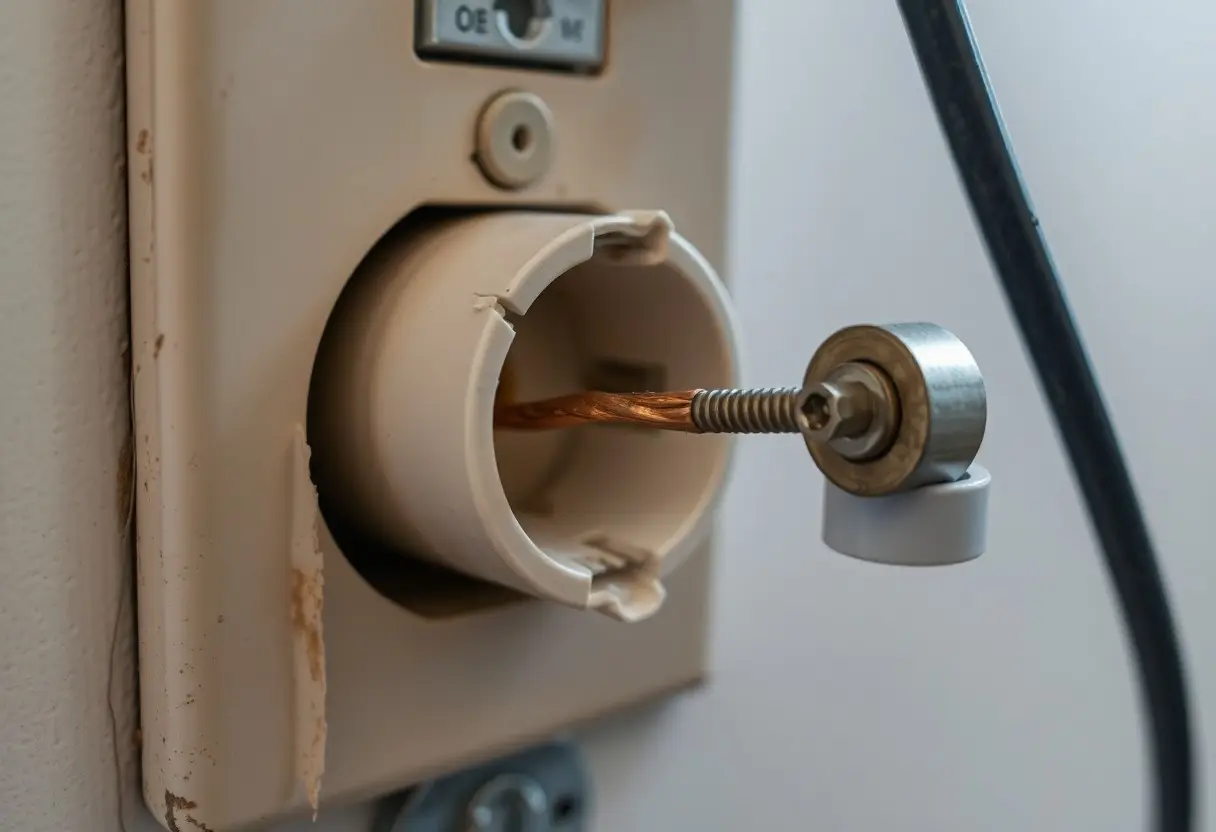

There’s clear signs you can spot to assess your fixtures: check for frayed wiring, burn marks, loose faceplates, and sparking or buzzing when switches operate; verify that outlets have GFCI protection, proper grounding, bulbs match rated fixtures, and mounts are secure; if you find any of these indicators, shut off power and call a qualified electrician immediately.
How-to perform a visual inspection
Start at the service panel and work room-by-room, scanning fixtures, switches, outlets and visible cable runs for scorching, exposed conductors, frayed insulation, or loose mounting. You should note wobble in ceiling fixtures, gaps greater than 1/8″ at the ceiling, or dark rings around sockets. Photograph suspect areas, log circuit labels, and avoid touching energized parts-visual checks catch most pre-failure signs that lead to overheating or arcing incidents.
Recognizing physical damage, loose parts, and burn marks
If you spot melted plastic, brown or black burn marks, cracked porcelain sockets, or glass broken from a lamp, classify the fixture as unsafe. You should also test for movement: a light that wobbles or an outlet cover that shifts indicates stripped threads or loose mounting screws. Frayed cords with exposed conductors or softened insulation are immediate hazards and should be de-energized and replaced.
Spotting unsafe installation practices and nonstandard wiring
Watch for taped splices behind drywall, junctions without accessible boxes, or extension cords used as permanent wiring-each is a code violation and a fire risk. Check wiring type: 14/2 on 15A, 12/2 on 20A, black/red hot, white neutral, bare/green ground; aluminum branch circuits from the 1960s-70s need special connectors. Also flag double-tapped breakers, open knockouts, or ungrounded two-prong outlets on metal boxes.
Inspect knockouts and conduit connections for loose or missing fittings, and verify GFCI/AFCI presence where required (kitchens, bathrooms, outdoors, bedrooms per modern codes). A common failure is a multi-wire branch circuit with shared neutrals wired incorrectly-this creates overloading and arcing. If you find aluminum conductors, note that without anti-oxidant and approved connectors the joint temperature can rise, increasing fire risk.
How-to test fixtures safely
Before you touch wires, shut off the correct breaker and verify de-energized circuits with a non-contact voltage tester and a multimeter. For US homes expect 120-125 V on branch circuits and up to 240 V for ranges/ACs; treat anything above 50 V as hazardous. Use insulated tools, eye protection, and lockout/tagout where possible. If you detect arcing, burning smells, or damaged insulation, stop and call a licensed electrician immediately.
Essential tools and safety precautions before testing
Carry a calibrated non-contact voltage tester, digital multimeter, insulated screwdrivers, GFCI tester, and insulated gloves rated for the expected voltage (many are rated to 1,000 V). Test your voltage tester on a known live source before use. Turn off breakers and place a tag on the panel; if you must work with live circuits, use one-hand technique, keep your body clear of grounded surfaces, and have someone nearby to assist in emergencies.
Simple functional tests for wiring, grounding, and switches
With power off, verify absence of voltage with a non-contact tester, then confirm with a multimeter set to AC volts-good branch circuits read about 120-125 V. For switches, check continuity in both positions and inspect for loose connections or burning. Test grounding by measuring between switch box or fixture ground and neutral/hot; you should see near-zero resistance to the circuit ground and the expected voltage between hot and ground.
If a multimeter shows fluctuating voltage or you detect intermittent continuity, you may have a loose neutral or arcing connection-these often cause flickering lights and can generate heat sufficient to ignite surrounding material. For example, a bedside lamp circuit measured 115-80 V when a loose neutral was present; you should tighten or replace the terminal and re-test. When in doubt, stop testing and call a licensed electrician.
Common hazards and risk factors
You should watch for overheating, flickering, arcing, moisture intrusion, loose connections, and incompatible bulbs, since each raises fire or shock risk; a 60 W bulb in a 40 W-rated fixture or repeated trips on a 15 A breaker are clear red flags. Visible charring, buzzing, or scorch marks mean degraded insulation or contacts. This demands immediate isolation of power and professional assessment.
- Overheating
- Flickering
- Arcing
- Incompatible bulbs
- Moisture
- Corrosion
- Poor enclosure integrity
- Loose connections
- Damaged insulation
- Improper grounding
Overheating, flickering, arcing, and incompatible bulbs
You will often find overheating when a bulb exceeds the fixture rating-installing a 75 W bulb in a 40 W-rated lamp can char sockets within weeks. Flicker usually signals a loose neutral, voltage drop, or failing driver; arcing produces intense heat and pitting, as arcs can reach several thousand °C, leaving melted contacts and blackened sockets. If you see smoke, buzzing, or black deposits, shut off power and replace the fixture or component.
Moisture, corrosion, and poor enclosure integrity
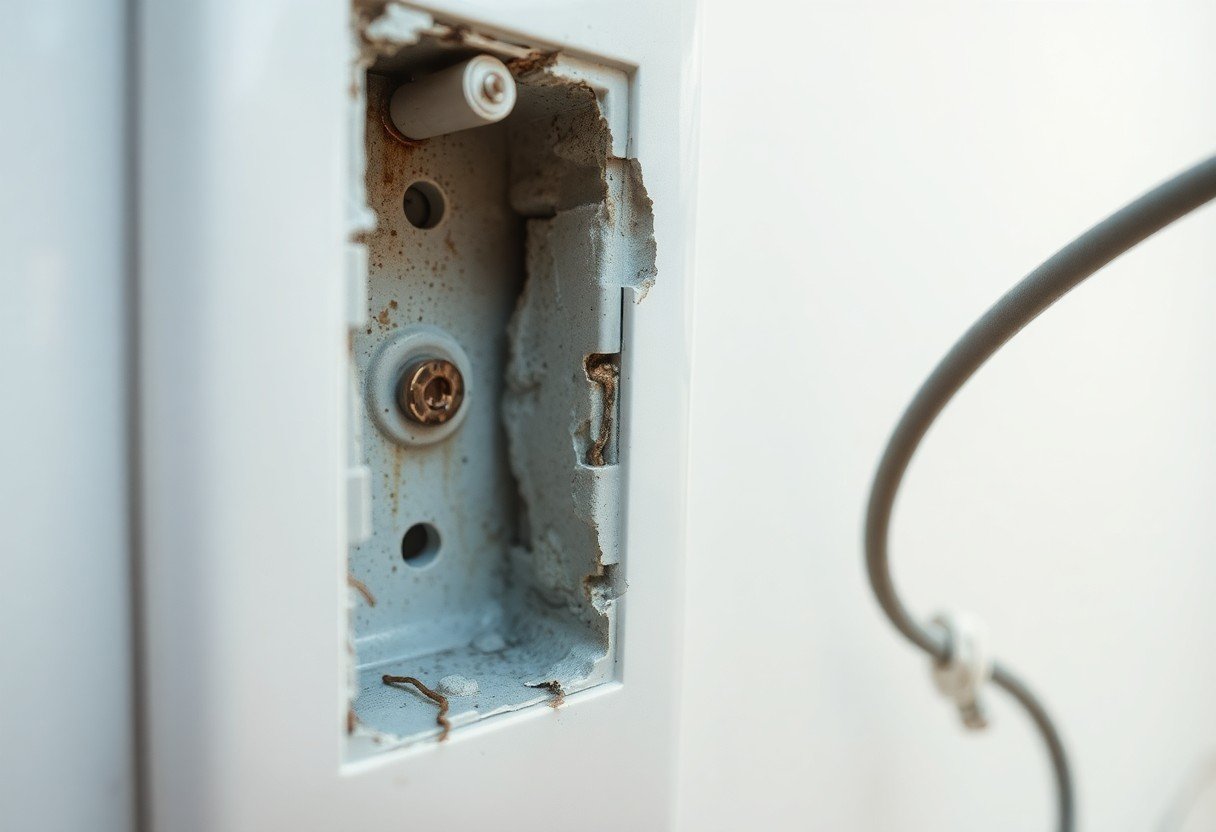
You must treat any moisture inside a fixture as high risk: water causes short circuits, corrodes contacts, and defeats insulation. Missing gaskets, cracked lenses, or fixtures without an appropriate IP rating (e.g., use IP44 for splash zones, IP65 for direct spray) let humidity in and accelerate failure. Green or white corrosion on terminals, loose screws, and pooling water are clear signs you should remove power and repair or replace the unit.
Corrosion raises contact resistance, which creates localized heating even under normal load; a compromised terminal in a 120 V circuit can glow hot at only a few amperes. You should inspect outdoor and bathroom fixtures annually, noting gasket condition, sealant gaps, and discolored wiring. In one field inspection a recessed exterior light showed hairline cracks allowing moisture that corroded the driver and produced intermittent arcing-replacement resolved repeated breaker trips. Keep fixtures matched to their environmental rating to avoid hidden failures.
Factors indicating replacement or upgrade is needed
You should consider replacement or upgrade when clear hazards appear; common indicators include:
- Age over 25-30 years or obsolete components like cloth-insulated or knob‑and‑tube wiring
- Frequent trips, arcing, scorch marks, or hot covers
- Aftermarket modifications and visible DIY fixes
- Missing ground or required GFCI/AFCI protection
The presence of two or more signs means you should get a licensed electrician to evaluate.
Age, obsolete components, and noncompliance with codes
If your fixtures or wiring are more than about 25-30 years old, you may have obsolete components-two‑prong outlets, cloth insulation, fuse boxes-that fail modern safety standards; you should check for missing GFCI/AFCI protection in kitchens, bathrooms, and bedrooms, since noncompliance increases shock and fire risk and often necessitates an upgrade to meet current codes.
Repeated failures, aftermarket modifications, and DIY fixes
Frequent breaker trips, lights that flicker or dim, sockets that heat up, or fixtures that have been altered with aftermarket modifications or amateur splices are red flags; if you see burnt insulation, tape‑only splices, or mismatched drivers, you should treat the installation as potentially unsafe and plan for professional replacement or repair.
When failures repeat-more than a few trips per month or persistent flicker-you may have loose connections, overloaded circuits, or aluminum‑to‑copper joints that raise resistance and heat; examples include a ceiling light that trips a 15 A breaker three times in a week or an LED retrofit whose driver overheats inside a closed fixture. Arcing, melted insulation, and scorch marks are immediate hazards, so you should isolate the circuit and contact a licensed electrician for proper diagnostics and replacement.
Practical tips for remediation and temporary safety measures
Begin by isolating the circuit at the breaker, labeling it, and keeping people away; use insulated gloves and a non-contact voltage tester before touching anything. Prioritize remediation that replaces damaged wiring, corroded contacts, and back-stabbed outlets instead of cosmetic fixes. For temporary safety measures, install secure cover plates, unplug affected devices, and avoid high-load appliances on suspect circuits. Any inspection or repair you attempt should start with testing and confirming the power is off at the breaker.
- Temporary fixes: use wire nuts on exposed conductors and snug outlet covers for short-term protection.
- Remediation: swap back-stabbed outlets for screw-terminals and install GFCI within 6 feet of sinks.
- Contact a licensed electrician if you find aluminum wiring, smoke, burning odors, or charred components.
Safe temporary fixes and reducing immediate risk
Turn the breaker off to the affected circuit and verify with your non-contact voltage tester; then fit a proper cover plate, cap exposed wires with wire nuts, and secure loose fixtures using the original mounting screws. You should stop using high-draw appliances like space heaters or hair dryers on that circuit, keep children and pets at least 3 feet away, and use a GFCI adapter for temporary protection until professional remediation is completed.
Selecting replacement fixtures and correct bulbs
Match any replacement fixtures to the location rating (damp vs. wet), voltage (typically 120V), and box capacity, and pick the correct bulbs by observing the fixture’s max wattage-e.g., 60W incandescent ~800 lumens, so choose a 9-12W LED equivalent to reduce heat and energy use.
When you choose replacements, buy UL-listed fixtures and confirm dimmer and fan compatibility; outdoor fixtures must be wet-rated. For circuit-wire matching, use 14 AWG on 15A circuits and 12 AWG on 20A circuits-installing a high-wattage fixture on undersized wiring increases overheat and fire risk. Also verify socket max wattage, mounting bracket type, and grounding; if box fill or wiring condition is uncertain, have an electrician verify before energizing.
How-to decide between DIY repair and hiring a professional
You can handle simple tasks like replacing bulbs, swapping a plug-in fixture, or tightening a loose faceplate, but stop and hire a pro for anything involving exposed wiring, repeated breaker trips, or systems over 120V/240V. If you encounter sparking, smoke, a hot outlet, or an entire circuit flickering, that’s beyond DIY. When you must remove a device cover and touch conductors or work on a circuit protected by a 15-20A breaker, call a licensed electrician.
Minor repairs you can safely perform (what not to touch)
You can replace bulbs, swap outlet or switch covers, tighten terminal screws on fixtures, and reset or replace a GFCI receptacle if you don’t alter the wiring. Do not strip, splice, re-terminate, or touch bare wires, connections inside a metal junction box, or any aluminum wiring. When a repair requires working behind the device or inside a box, hand the job to a professional to avoid shock or fire risk.
When to call a licensed electrician and what information to provide
Call an electrician for persistent tripping, visible charring, sparking, burning odors, hot switches or outlets, water near electrical devices, 240V appliance issues, or if your home has knob-and-tube or aluminum wiring. Tell them which breaker or circuit is affected, how often the fault happens (e.g., daily trips), and whether multiple rooms or just one outlet are impacted.
Before they arrive, photograph the affected outlet, fixture, and the panel, note the exact breaker number and times faults occur, list any recent electrical changes or DIY work, and state the house age and wiring type. Inform them if power is currently off, any tests you ran, and whether children or pets are at risk so they can bring proper tools, parts, and plan for permits or replacements.
Final Words
Hence you must treat persistent sparking, burning smells, scorch marks, frequent breaker trips, buzzing or flickering lights, warm switches or outlets, exposed or corroded wiring, and DIY alterations as signs that your fixtures are unsafe. If you notice moisture near fittings or outlets that aren’t grounded, shut off power to the circuit and contact a licensed electrician for inspection and repair; do not attempt complex repairs yourself.